The Etymon Foundation is dedicated to the study and advancement of the life and work of Meryem Catherine Christer Roberta Hennix (1948–2023). Named after Etymon Editions—a small publishing imprint that Hennix founded in the late 1990s to publish her own work, including the seminal release The Electric Harpsichord—the Foundation serves as the official steward of the artist’s archive.
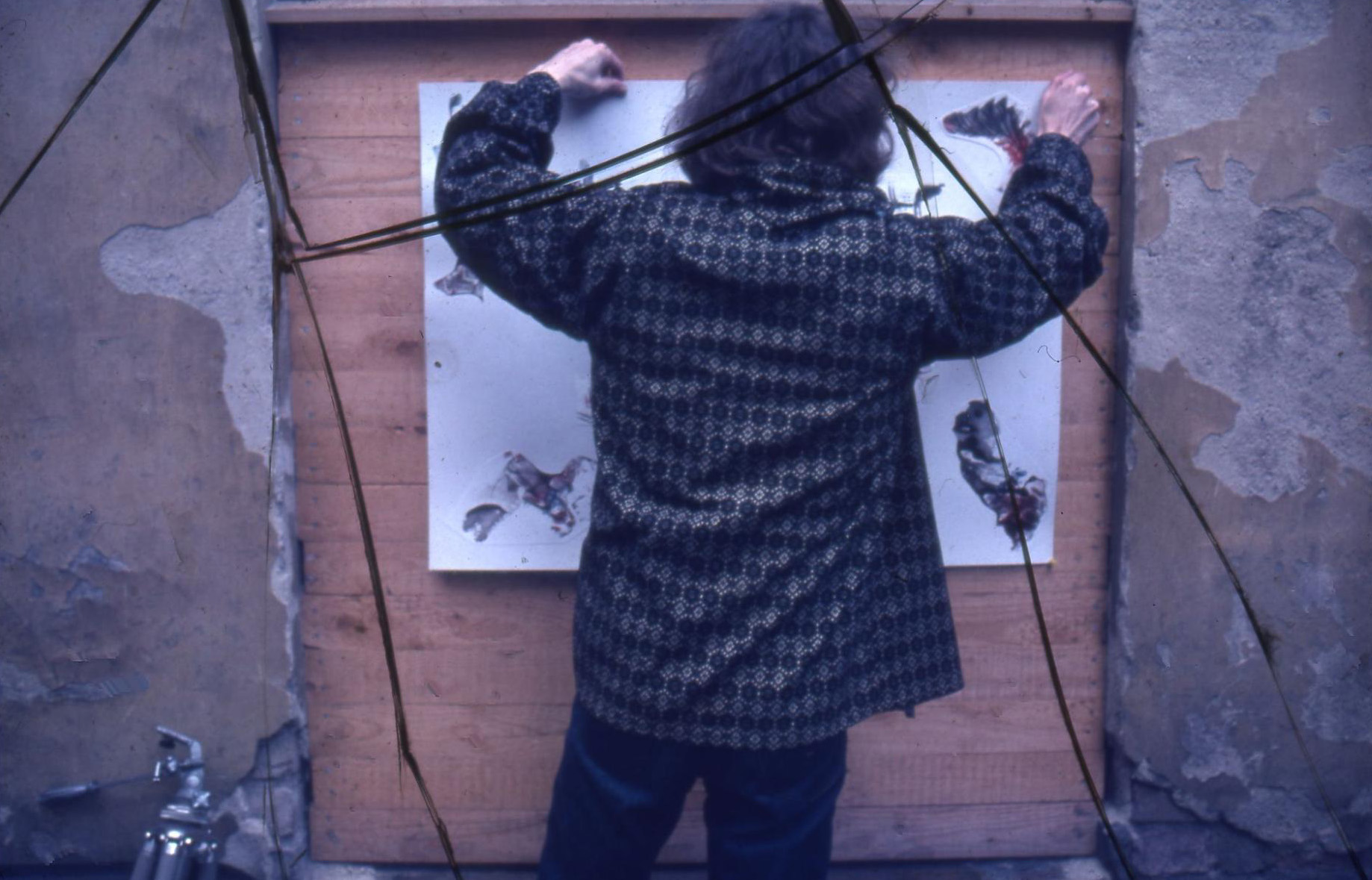
Catherine Christer Hennix was a composer, musician, and sound artist whose body of work spanned minimal music, computer programming, poetry, sculpture, and light art, pushing the technical and conceptual boundaries of her media toward singular ends.
Since its founding, Blank Forms has worked to promote and preserve the work of Catherine Christer Hennix through the presentation of live solo and ensemble performances, exhibitions of her visual art, and the publication of her writings as well as new and archival recordings. Blank Forms’ Artistic Director, Lawrence Kumpf, has worked closely with Hennix since 2010 and, following her passing, assumed stewardship of her archive. Over the past two years, he has overseen the organization of her papers and the preservation of her audio materials in collaboration with Marcus Pal, one of Hennix’s main collaborators in the last decade of her life. The Foundation supports research initiatives, exhibitions, and performances related to Hennix's artistic contributions, ensuring her legacy continues to inspire future generations of scholars, artists, and audiences. More information about Blank Forms’ publications, past events, and exhibitions related to Catherine Christer Hennix can be found on her contributor page. For inquiries regarding the Foundation, please contact etymon.foundation@blankforms.org.
* * *
Born in Stockholm in 1948, Hennix came of age amid the city’s jazz and electronic music scenes. A drummer from childhood, she played in informal groups with her brother Peter Hennix and heard American luminaries including Idrees Sulieman, Eric Dolphy, John Coltrane, and Albert Ayler during their stays in Stockholm, often at the jazz club Gyllene Cirkeln. Shortly after the 1964 founding of Elektronmusikstudion (EMS), she joined the studio, working alongside Swedish composers Sten Hanson and Åke Hodell on early computer and text-sound compositions. She published the score Identitäten II on Hodell’s Kerberos imprint in 1968 and presented Still Life, Q at the second Text-Sound Compositions festival, organized by the experimental arts society Fylkingen, the following year.
In the late 1960s and early ’70s, she moved between Stockholm and New York, where she encountered La Monte Young and Marian Zazeela and, through them, the Hindustani Kirana Gharana vocalist Pandit Prān Nāth. She became Prān Nāth’s disciple in 1971, centering her practice on just intonation, modal duration, and the discipline of continuously tuned sound. While studying as an exchange student at the University of California, Berkeley in 1972, Hennix immersed herself in mathematical logic and the foundations of computation—set theory, recursive function theory, formal grammars, and category (topos) theory. Her compositions from 1973, including Forcing, Morasse, and Fixed Points, translated these frameworks into the basis for a theoretical sound practice, treating musical form as a field of algorithmic iteration and self-reference. In her own description, these “infinitary compositions” expand indefinitely through non-trivial recursive processes, linking modal drone to the logic of computation, where repetition becomes generative—developing and enriching itself with each iteration.
In 1976, she consolidated the many facets of her practice with two programs at Stockholm’s Moderna Museet. The first, Brouwer’s Lattice, a ten-day festival curated with Ulf Linde, placed The Deontic Miracle alongside works by Young, Terry Riley, and Terry Jennings within an environment of Hennix’s sine-wave compositions, lightboxes, and projections. From this program emerged the recording fragment later dubbed The Electric Harpsichord, a hallucinatory field of beating patterns and microtonal drift that philosopher-musician Henry Flynt would later frame as “The Hallucinogenic/Ecstatic Sound Environment.” Later that year, Toposes and Adjoints, her second presentation at Moderna Museet, unfolded as a total environment incorporating steel sculptures, projections, a continuously variable floor painting, sine-wave compositions, and fragrance. It was accompanied by Notes on Toposes and Adjoints (1976), a constellation of texts functioning less as commentary than as a parallel exploration of the installation’s themes.
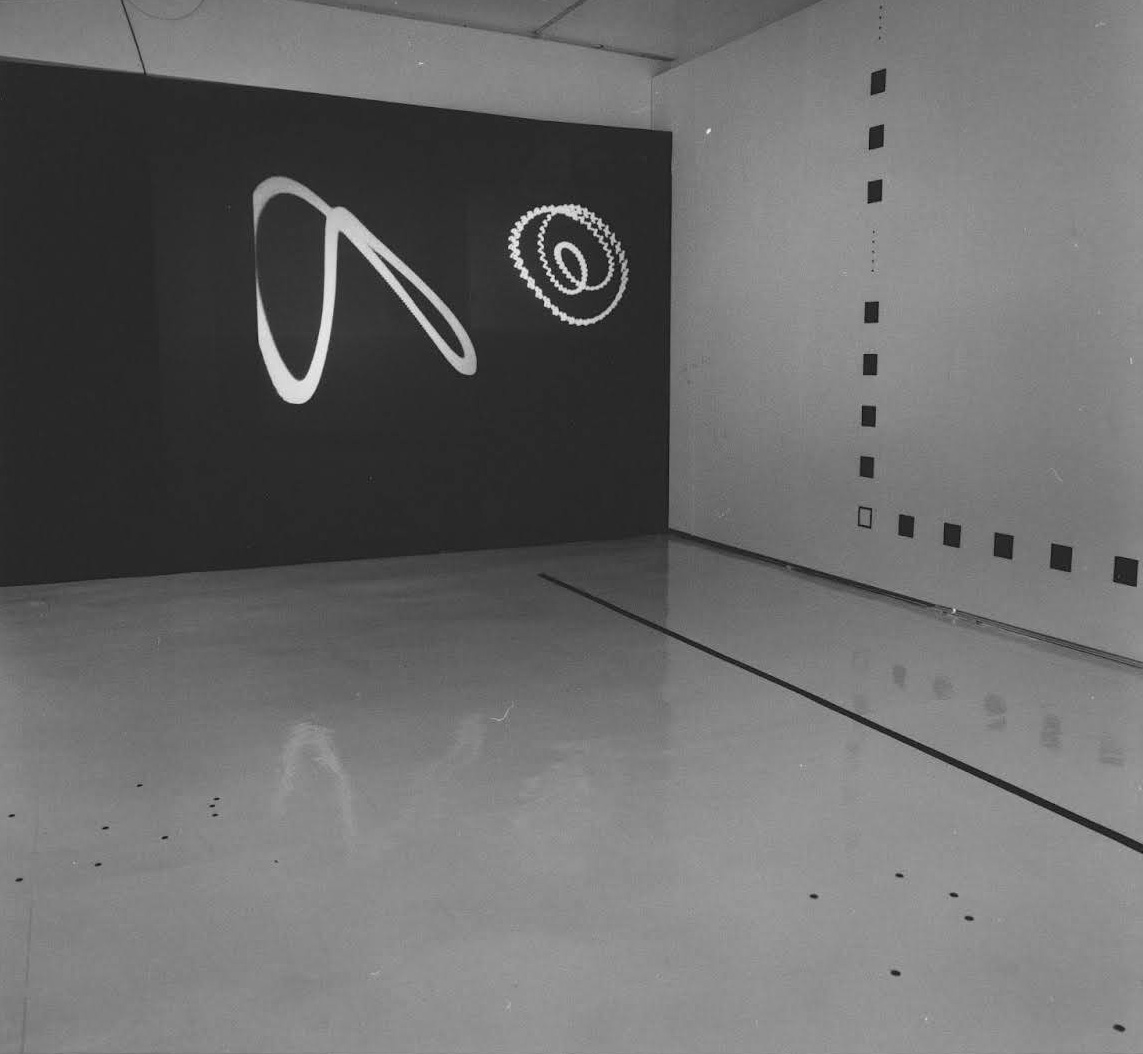
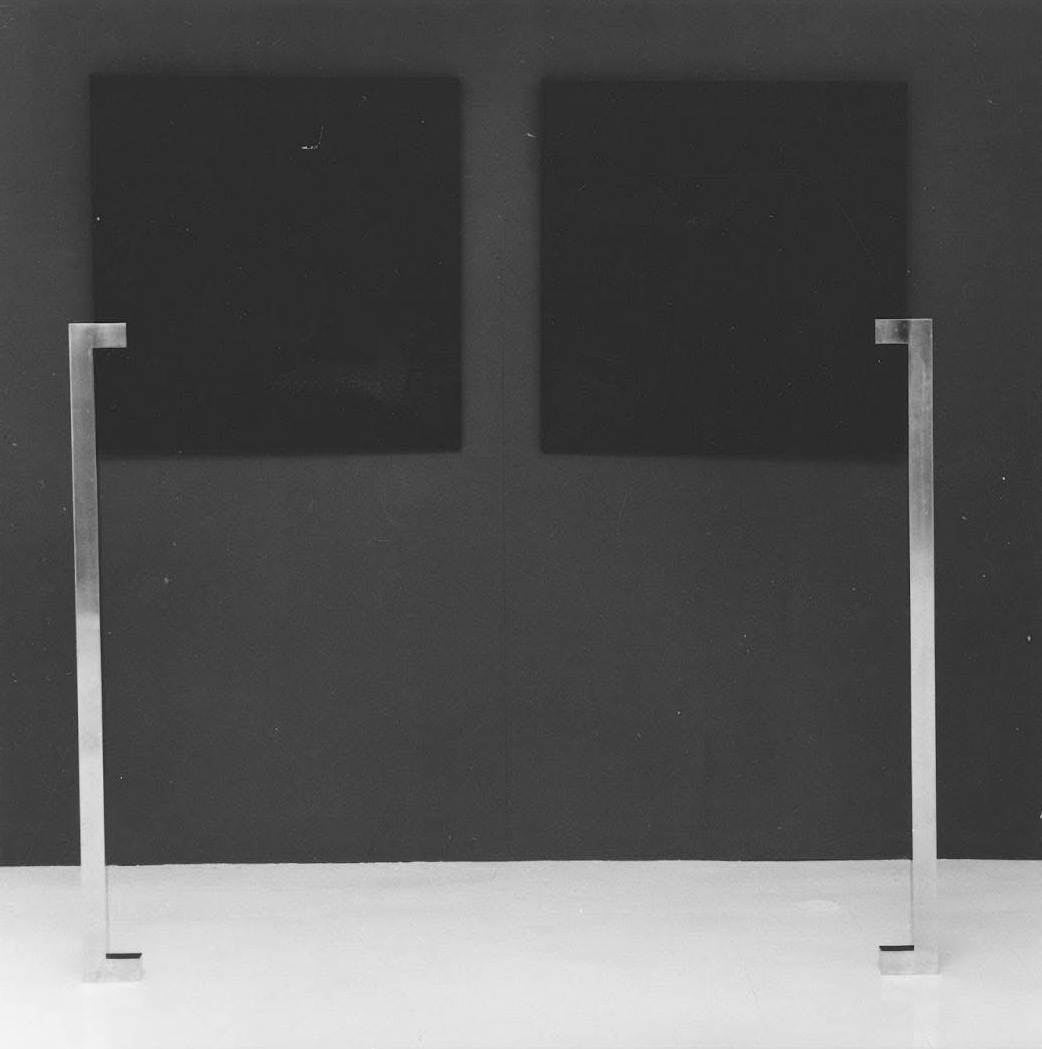
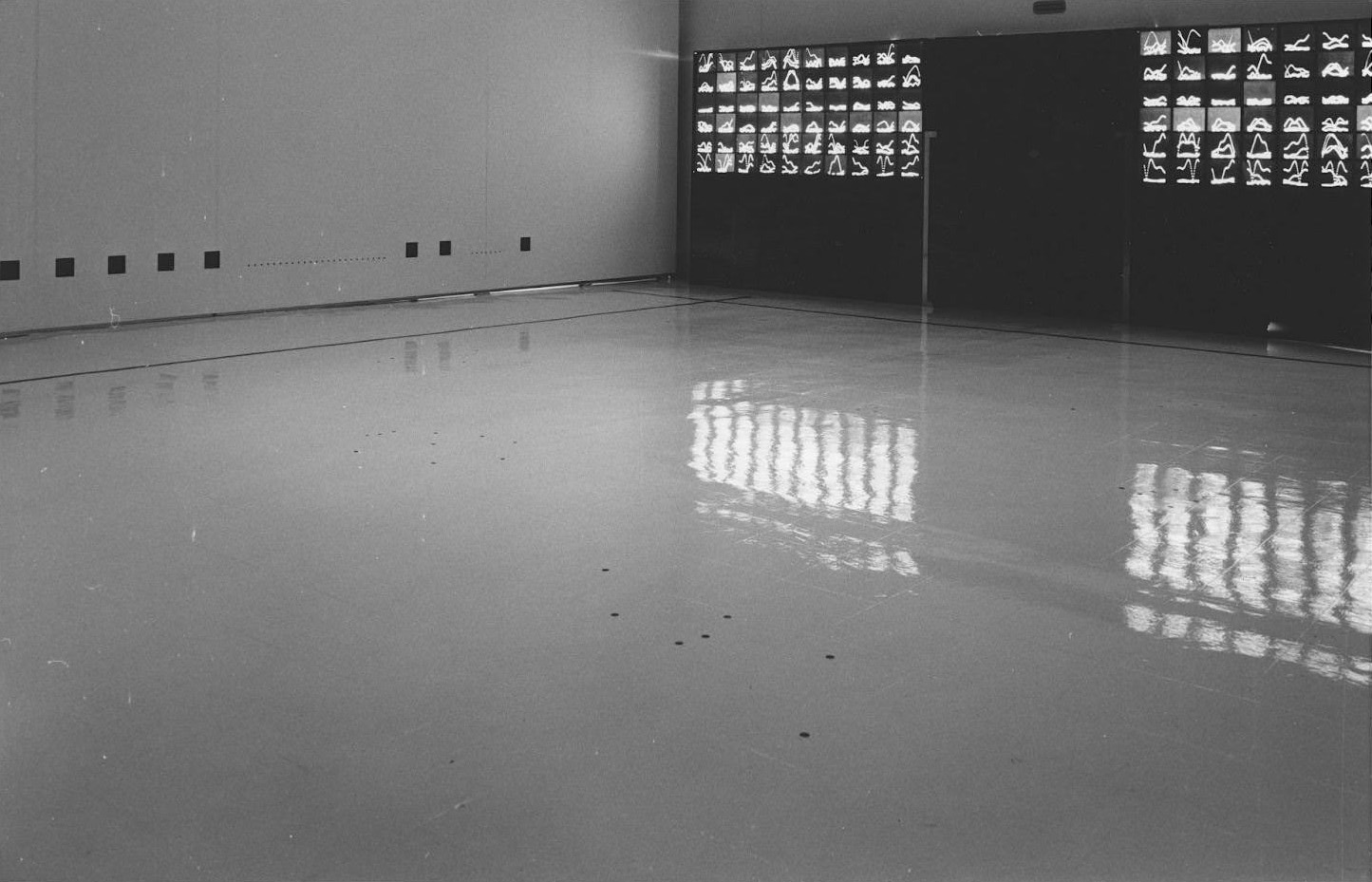
Installation views of Toposes and Adjoints at Moderna Museet in Stockholm, 1976.
Hennix described her total installation—sometimes referred to as the (E-) environment—as “epistemic art,” a concept that would carry through her later decades. In retrospect, she framed this as a revision of Flynt’s “concept art” (a term he coined in 1961). Where Flynt’s approach emphasized syntactic formal operations, Hennix was concerned with semantics—structures that generate meaning through their construction and inhabitation. Drawing on the intuitionism of L. E. J. Brouwer and the categorical logic of F. W. Lawvere, she recast her “semiotical objects” as moments of “homosemeiosis,” a neologism designating the creation of processual signs through a continuous mapping between two topoi that preserves structure while changing form. This process, she proposed, unfolds through the sustained attention of an idealized “Creative Subject,” borrowing Brouwer’s terminology. As the Creative Subject’s attention deepens, the work’s structure becomes meaningful through the interpretive models she supplies as a “form of thought.”
By 1978, Hennix relocated to New York to serve as a professor of mathematics and computer science at SUNY New Paltz and later became affiliated with the Artificial Intelligence Laboratory at the Massachusetts Institute of Technology. Although her academic appointment in upstate New York lasted only a year, she collaborated with figures such as poet Charles Stein, Donald Byrd and George Quasha while organizing seminars under the name The Rhinebeck Institute. She collaborated with multi-instrumentalist Arthur Rhames and remained a key interlocutor of Flynt, recording with him as the Dharma Warriors. By the late 1980s, she returned to Europe, first to Sweden and later to Amsterdam with her partner, photographer Lena Tuzzolino, whom she met through a group exhibition at the Museum Fodor. In the Netherlands, she studied Lacanian psychoanalysis, produced visual art and Nō-inspired theatrical works, continued performing and composing, and conducted mathematical research at the University of Amsterdam’s Institute for Logic, Language, and Computation. In 2000, she received a Centenary Prize Fellowship from the Clay Mathematics Institute for a paper coauthored with Alexander Yessenin-Volpin.
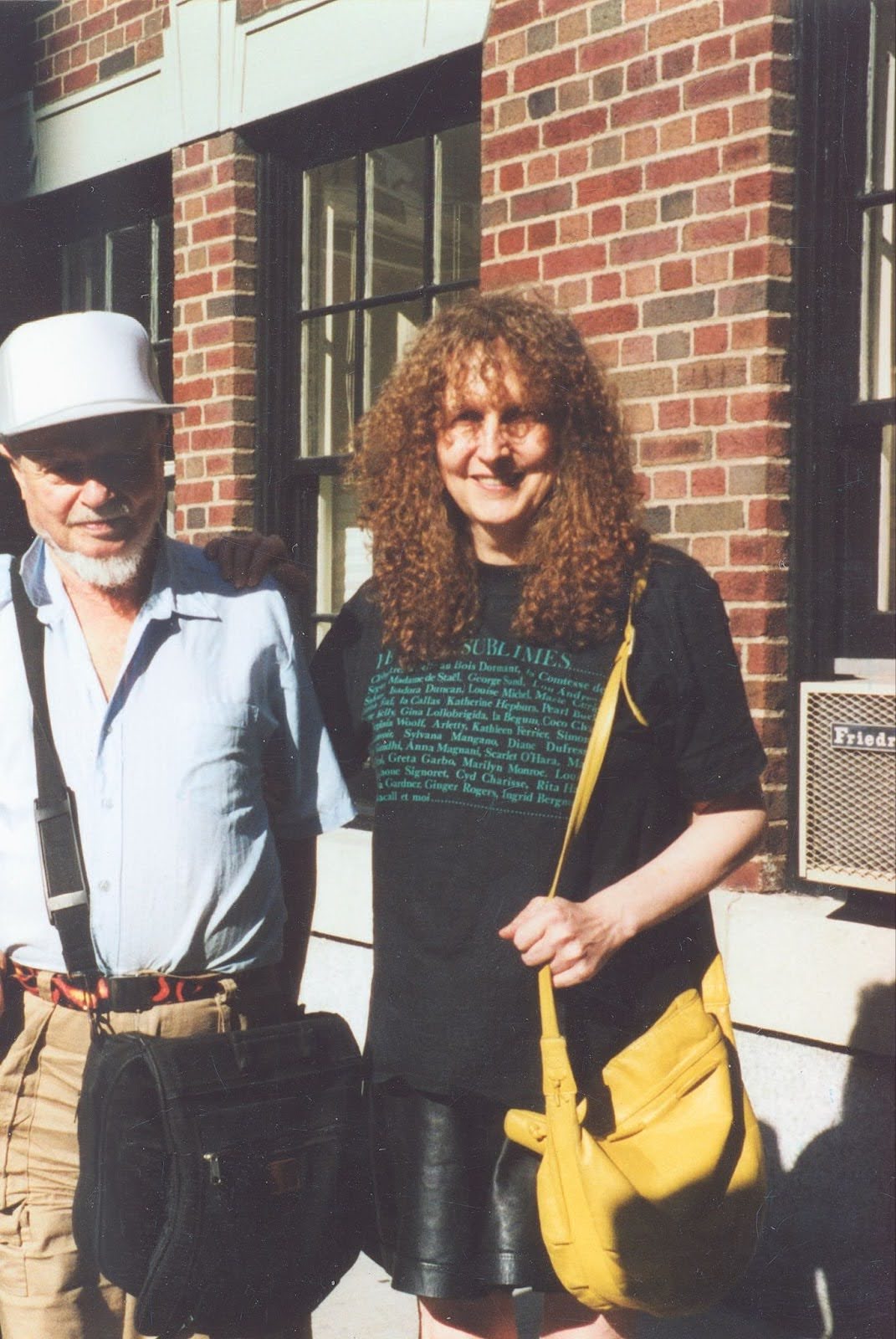
For much of her life, Hennix remained an enigmatic presence within musical minimalism, known primarily for her 1976 composition The Electric Harpsichord, which was not released until 2010. Her resurgence and later activity were shaped in part by Henry Flynt’s sustained advocacy through concerts, recordings, and extensive correspondence. In 2003, she returned to producing computer-generated sound works, initiating a productive two-decade period. After a long hiatus from leading ensembles, she formed the Chora(s)san Time-Court Mirage with Hilary Jeffery in 2005 and later directed the just intonation Kamigaku Ensemble, and toured internationally with both groups. During this period, she released archival recordings, published her poetry and theoretical writings, and exhibited her visual work in major institutional surveys, including Traversée du Fantasme at the Stedelijk Museum, Amsterdam, and Thresholds of Perception at Empty Gallery, Hong Kong, both in 2018.
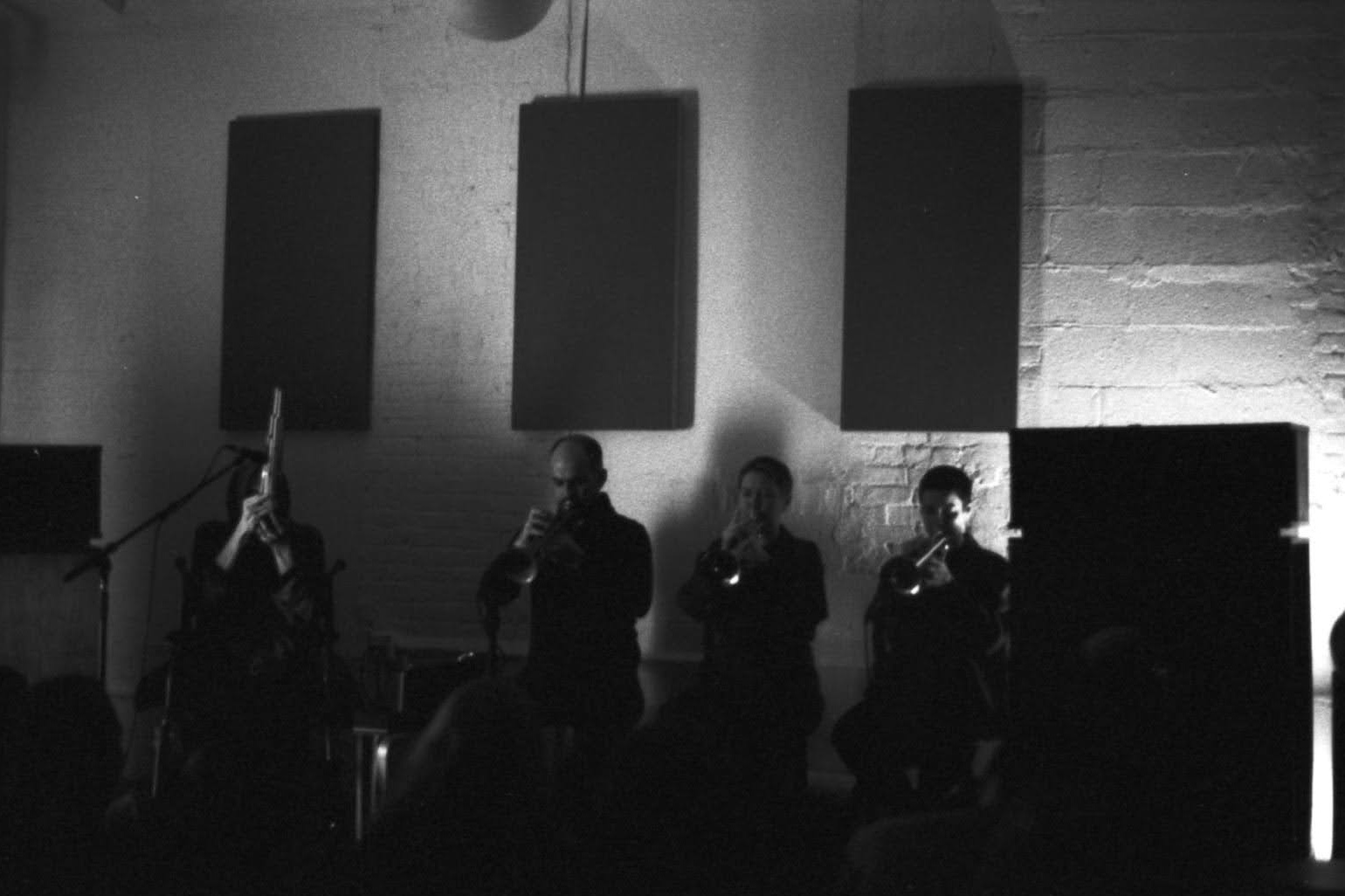
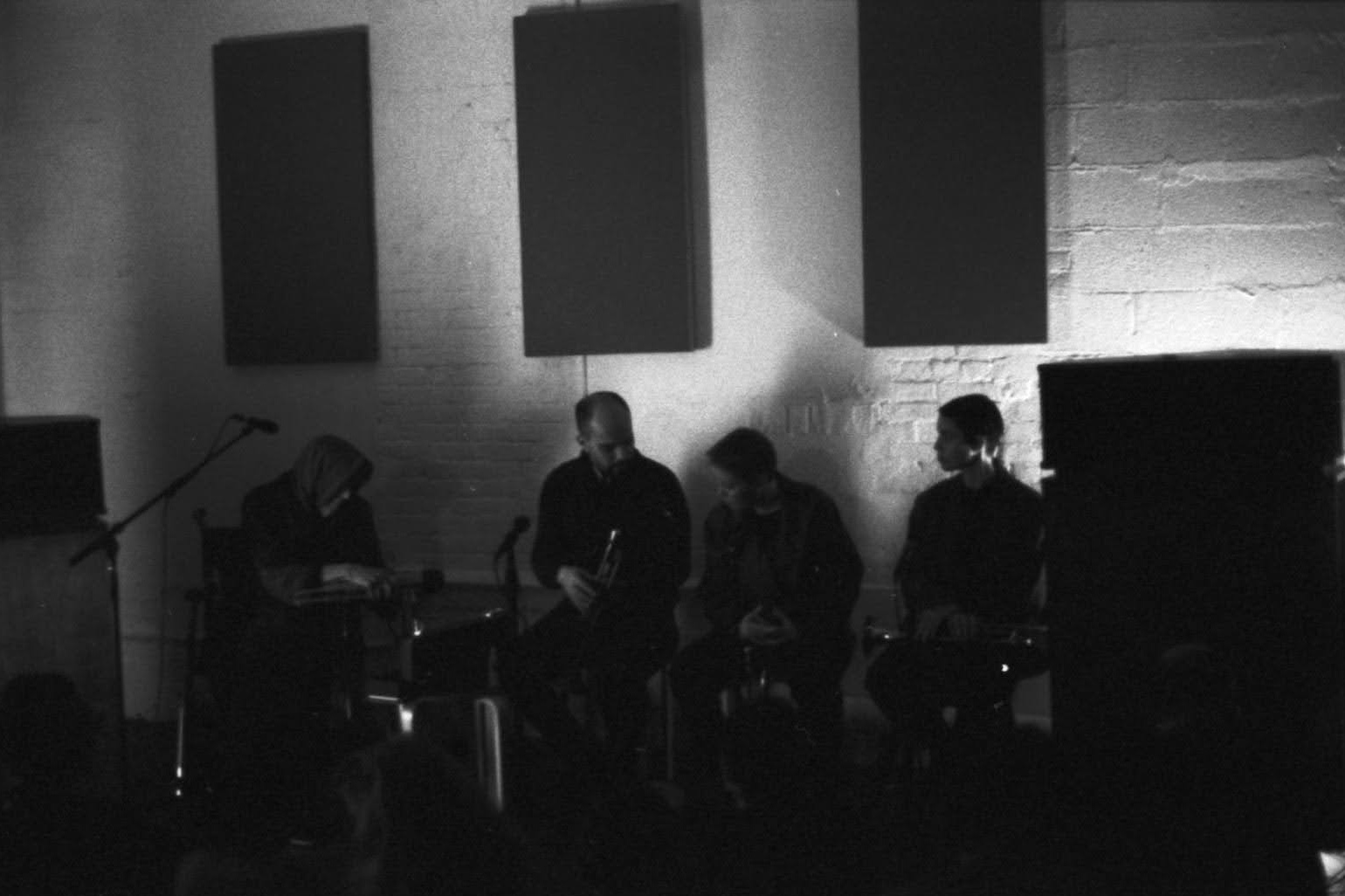
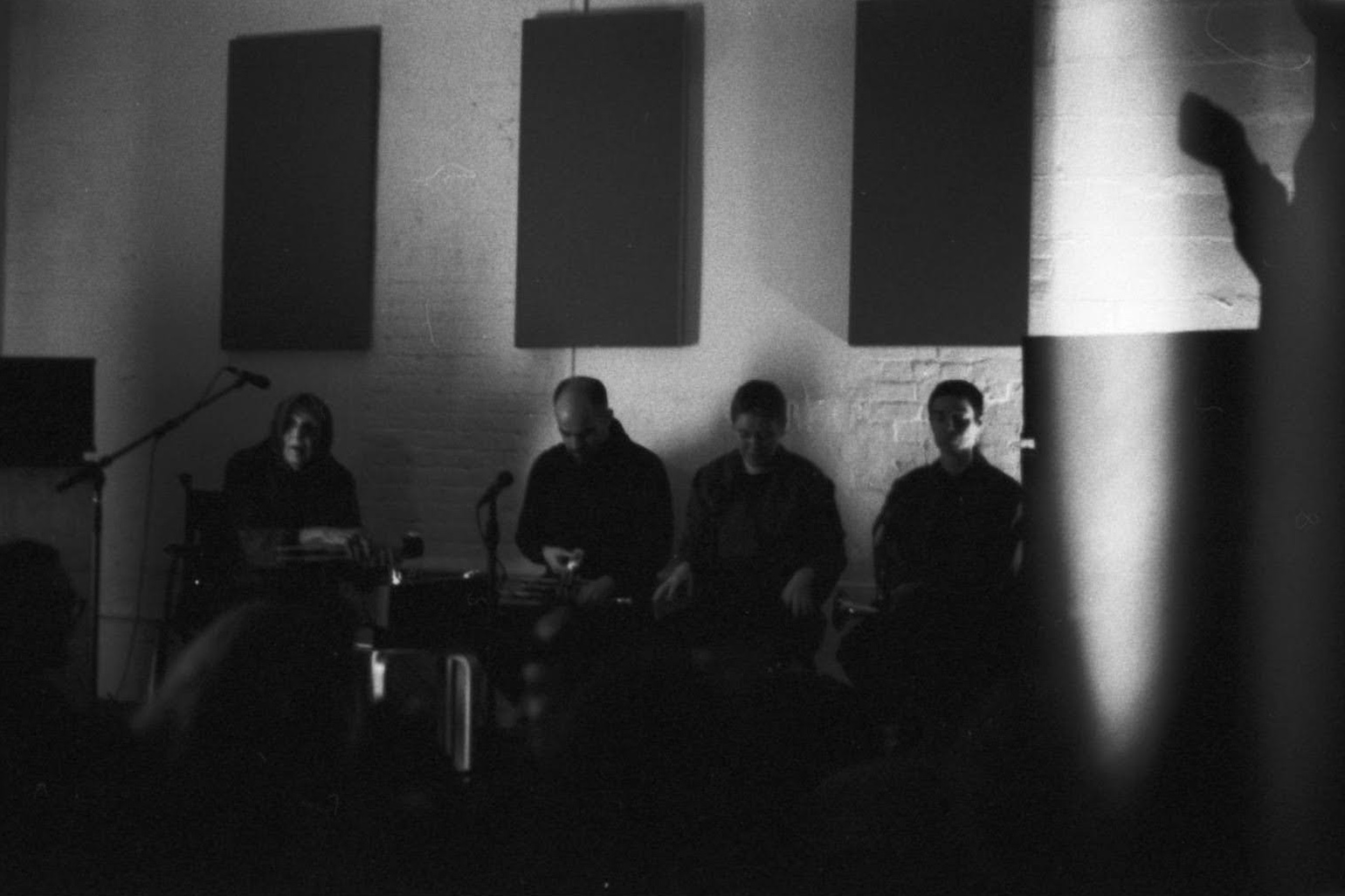
The Kamigaku Ensemble—Catherine Christer Hennix on shō; Amir ElSaffar, Ellen Arkbro, and Susana Santos Silva on trumpet; and Marcus Pal (not pictured) on electronics—perform at Blank Forms in November 2022. Photos: Austin Larkin.
Hennix was introduced to Sufism during her studies with Prān Nāth—first within the Chishti Order and later under Sheikha Fariha in the Nur Ashki Jerrahi Order—Hennix integrated devotional Islamic practice into her music, poetry, and theoretical work. She formally converted to Islam before relocating to Istanbul in 2019 where she spent her final years immersed in the call to prayer and what she described as the sound of the One, continuing her lifelong inquiry into form, consciousness, and transcendence. Hennix died in her home in Istanbul on November 19, 2023.
New and archival works by Hennix published by Blank Forms Editions include Selected Early Keyboard Works (2018), The Deontic Miracle’s Selections from 100 Models of Hegikan Roku (2019), Unbegrenzt (2020), Chora(s)san Time-Court Mirage’s Blues Alif Lam Mim (2021), Solo for Tamburium (2023), and Further Selections from The Electric Harpsichord (2024), along with a two-volume collection of her writings, Poësy Matters and Other Matters (2019).